
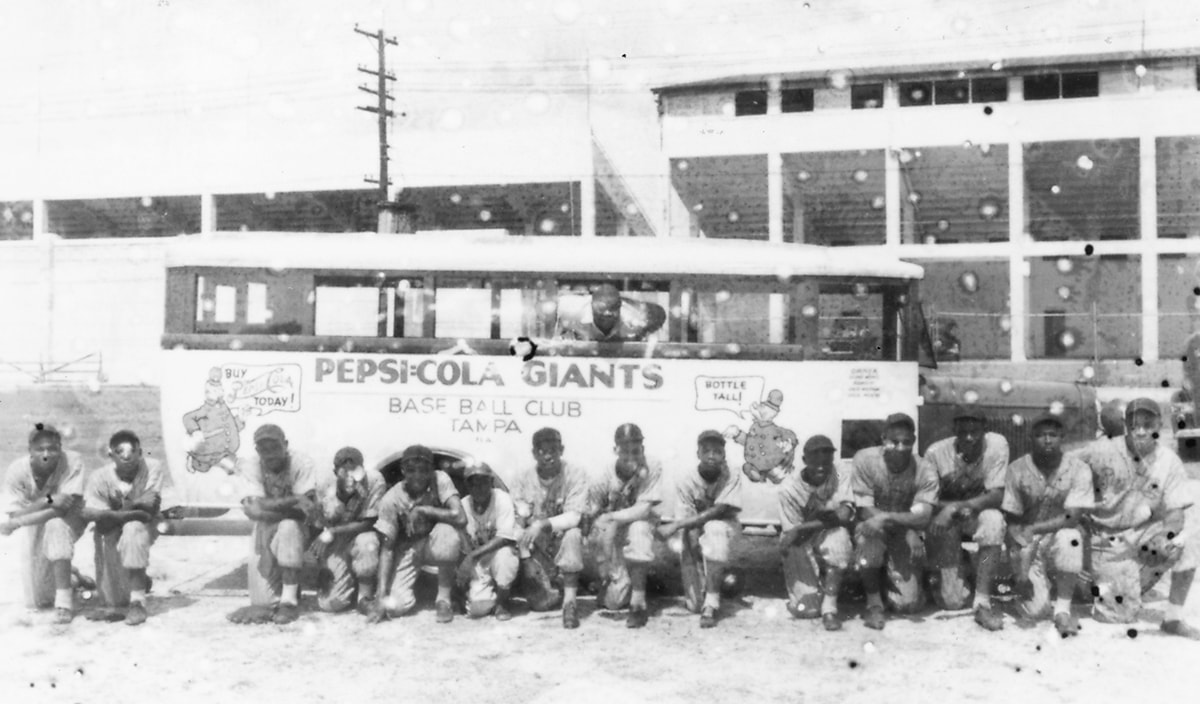
 Pepsi Cola Giants, circa 1950s. The Tampa Bay Rays opened their 2008 run to the American League Pennant by selecting Walter Lee “Dirk” Gibbons with their first pick in the draft. Even for an organization with a reputation for smart draft picks, this one proved exceptional, if somewhat belated. “Dirk” Gibbons, after all, had long since seen his fastball velocity decline, and the break in his curve ball dwindle. Then 79, his playing days were long past. He and his Tampa Rockets’ teammates were pioneers however and the Rays, by selecting him first in the Negro Leagues Draft, honored the legacy of the Florida State Negro Leagues in Tampa Bay’s baseball history Whereas much has been written about the disproportionate number of baseball players grown in the Tampa Bay area, little is known about the Negro Leagues here (or anywhere else, for that matter). Generally, even at the highest levels, few statistical records were kept, and often, seasons fizzled out rather than culminating in a championship. The Florida State Negro League consisted of six teams between 1947 and 1953. They played a circuit that included teams from St. Petersburg (the Pelicans), Bradenton (the 9 Devils), Daytona Beach (Black Cats), Lakeland (All Stars), and West Palm Beach (Yankees). The participating cities might change each year–Tampa itself fielded about six different teams over this period–and there is no record of league championships. The Tampa Rockets, though, consistently impressed. In 1948, Cyril Blythe Andrews Sr. bought the Pepsi Cola Nine, a Florida State Negro League team, and renamed them "The Rockets." Andrews Sr. was the proprietor and publisher of the Florida Sentinel, a bi-weekly newspaper with a local, African American focus. Andrews Sr. resurrected his father's newspaper, founded in Jacksonville in 1919 after it had declined due to the Great Depression, and reopened the Sentinel on Tampa's Central Ave in 1945. The founder of the Lily-White Pallbearer's Lodge in Tampa, Andrews Sr was well connected within Florida's Black businessman's community and probably influenced whatever league rules, transportation, and revenue sharing existed between teams in the Florida State Negro League. By 1953, the league foundered as more African Americans found their way into the majors and onto minor league affiliates. Even within their short lifespan, the Rockets gained quite a reputation. Jackie Robinson had broken the color barrier in Major League Baseball one year prior and brought his Jackie Robinson All-Stars to Tampa on an exhibition circuit in 1950. He finished his third season in the majors, having batted .342 and having won the National League Most Valuable Player for the Brooklyn Dodgers. They played the Rockets at Plant Field, but against pitcher "Dirk" Gibson, he went 0 for 1. Having just surrendered a homerun to Larry Doby, the 21-year-old Ybor City native collected himself and induced Robinson to ground out. So impressed was the NL MVP that he extended an invitation to Gibbons to join the Jackie Robinson All-Stars for their last game in Puerto Rico. 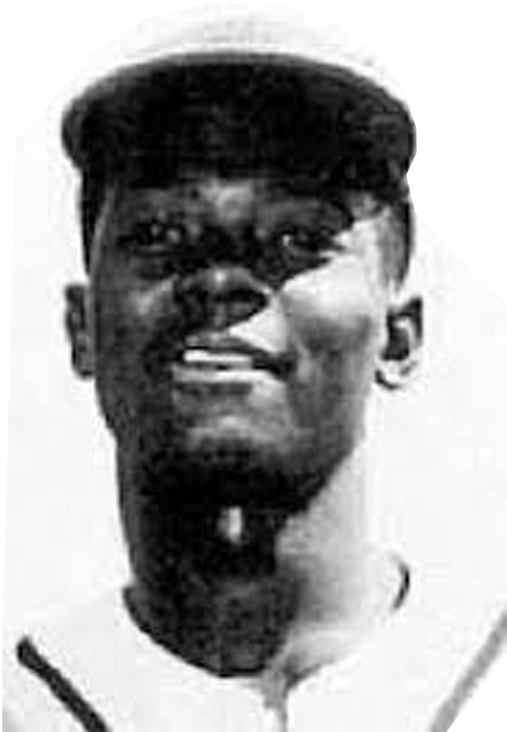 Walter Lee “Dirk” Gibbons "Jackie said meet us in Puerto Rico; that'll be our last stop," Gibson recalled. "That would give the major leagues a chance to see me, but when I received that ticket, Uncle Sam sent me his ticket. It said, 'Meet me in Jacksonville,' and I spent three years in the (Korean) War." Gibbons is one of only a handful of people in history who can claim to have pitched to the first two African American players to play in the majors and probably the only one still living who pitched to them both in a single afternoon. Whereas Robinson broke the color barrier in the major leagues in 1947, Doby was the first African American to hit a home run in a World Series game and the first, along with teammate Satchel Paige, to win a World Series championship with Bill Veeck's Cleveland Indians in 1948. Like Gibbons, Billy Reed played for the Tampa Rockets, but his career took a different path. A shortstop, he started his semi-pro career playing for the Bradenton 9 Devils, and later the Pepsi Cola Giants before Andrews Sr. Reed bought them and was drafted for service in Korea but never saw combat. Instead, he played Army ball for the Ft. Eustis Wheels, where he played teams from other military bases with multiple professional and semi-professional players. Willie Mays, arguably the greatest centerfielder ever to play the game, left Ft Eustis one month before Gibbons arrived. After getting discharged, Reed attended Florida A&M University in Tallahassee, where he stood out as a football and baseball star. His decision to choose baseball instead of football had everything to do with events of the recent past. "If it hadn't been for Jackie Robinson, I never would have had a shot as a professional baseball player. I probably would have stayed in football," Reed said. After playing semi-professional ball after graduation, Reed accepted the head coaching position for the varsity baseball team at Hillsborough High School in 1973. Under Coach Reed, the "Terriers" have won multiple district and regional championships, making it to the state championship game. More impressive, though, is that Coach Reed has stewarded multiple players into Major League Baseball. The list includes Dwight Gooden (Mets and Yankees), Gary Sheffield (Marlins, Yankees, Rays), Vance Lovelace (Angels), Jason Romano (Rangers and Dodgers), Floyd Youmans (Expos, Phillies), George Crum (Rangers), and Kiki Jones (Dodgers). His players owe him, Walter Gibbons, and the Negro League Players quite a debt. What benefits currently accrue to them in terms of money and prestige were wholly absent in the 1950s. Estimates vary, but Rockets players might earn a few hundred dollars a month during the season. Teams would split gate receipts with 60% going to the winner and 40% going to the loser after the owners took their cuts. Often, players would go into the stands and collect money from the fans. Roy Campanella famously stated that without Jackie Robinson, there would be no Brown vs. Board (the decision that ended segregation). Even so, that decision would be rendered in 1954, and it would take another 15 or so years for it to take hold in the states of the former Confederacy; for Black baseball players in the Tampa Bay area, that meant enduring some humiliating and sometimes downright dangerous situations. 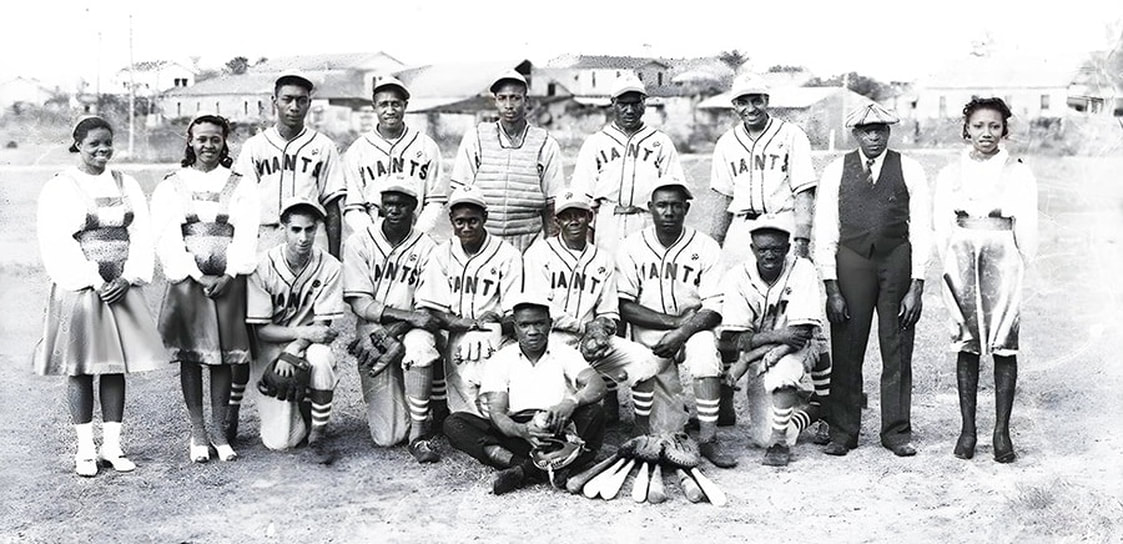 Pepsi Cola Giants, circa 1950 "Dirk" Gibbons recalls that after their game in 1950, Jackie Robinson had asked him about the minarets that dot the current-day campus of the University of Tampa. When Gibbons had attempted to walk Robinson over to a particular minaret, they were stopped by Tampa police. "Boy, where you goin," a police officer asked Gibbons. When he attempted to explain, the officer replied, "You know you're not allowed in here." According to Coach Reed, their bus stopped for gas once when a Tampa All-Star team was traveling to South Carolina. As they were filling up, some players had to use the restroom but were barred access because of their race. When the driver replied that if they weren't allowed to use the restroom, they'd stop filling up their tank, the gas station proprietor retorted by pulling out a gun and ordering him to finish his fill-up and then pay for the gas. There were other instances, both potentially violent and humiliating. "Dirk" Gibbons recalls a game called "shadow ball" in which Black ballplayers would partake, especially if it was raining, to entertain White audiences. "Ain't no ball in sight," he explained, "you throw just like you're pitching, you swing, then someone fielded it and threw you out at first base." Depending on the venue, the Black players would be ushered off the field after the performance. "Didn't matter if it was raining and if we were dirty, we'd have to get on the bus and get out of town," Gibbons remembered. Some contradictions and customs made little sense outside the segregated South. Black players were barred from playing with White teams, but White players could play in the Negro Leagues. Within the Florida State Negro Leagues, most games in Tampa Bay were played at the 22nd Street Field, later called the "Cyrus Greene" Park, and now the current home of the Belmont Heights Little League fields. Occasionally, the Rockets or another Negro League team would play at Plant Field, but the grandstand would be segregated into White and Black sections. Their games and fans were primarily banned at Cuscaden and MacFarlane Parks. Perhaps most distressing was an incident which happened recently. "Dirk" Gibbons had inscribed a notation on the cement pillars that held up the grandstand at Plant Field. He wrote, "pitched here in 1950 against Jackie Robinson All-Stars." On the day they tore the grandstand down, Gibbons asked one of the foremen if they would spare the inscribed plank. "I asked the guy if there was any way he could save that part. The guy wasn't too polite about it, and he told me ‘No.'" Gibbons said. "I was going to save that part because I knew it would be history one day." A plaque on one of the buildings bordering what is today Pepin-Rood Field on the University of Tampa campus commemorates stock car drivers who competed in the area. Another plaque acknowledges Jackie Robinson's visit to the stadium back in 1950. The original inscription is lost forever, as are most of the players of the Florida State Negro League. But like Jackie Robinson, their legacy lives on. CIGAR CITY MAGAZINE- SUMMER 2013 MARK PANUTHOS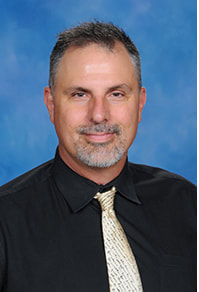 Mark Panuthos has been a teacher and coach at Admiral Farragut Academy since 1996. He teaches Advanced Placement United States History, Advanced Placement Microeconomics, American government and Intro to Economics. Mark aslo teaches part-time at St Peterburg College and recently won a Silverberg Grant for a project which will film the stories of Tampa Bay area World War II and Korean War veterans and archive them with the Library of Congress. He was also recognized as a Part-Time Faculty Mentor through the SPC Center for Excellence in Teaching and Learning (CETL). Mr. Panuthos designed the first totally online courses in American History for St Petersburg College. He has taught at SPC since 1996. When not teaching, Mr. Panuthos has contributed original histories to numerous publications including ABC Clio–Daily Life in the Civil War Encyclopedia, and the Society for American Baseball Research (SABR). He is also a frequent guest-lecturer at historical societies throughout Pinellas County. FOLLOW CIGAR CITY MAGAZINE
0 Comments
Your comment will be posted after it is approved.
Leave a Reply. |
Archives
June 2013
Categories
All
|
 RSS Feed
Cigar City is a Florida trademark and cannot be used without the written permission of its owner. Please contact [email protected]
© 2021 Cigar City Magazine. ALL RIGHTS RESERVED.
© 2021 Cigar City Magazine. ALL RIGHTS RESERVED.