
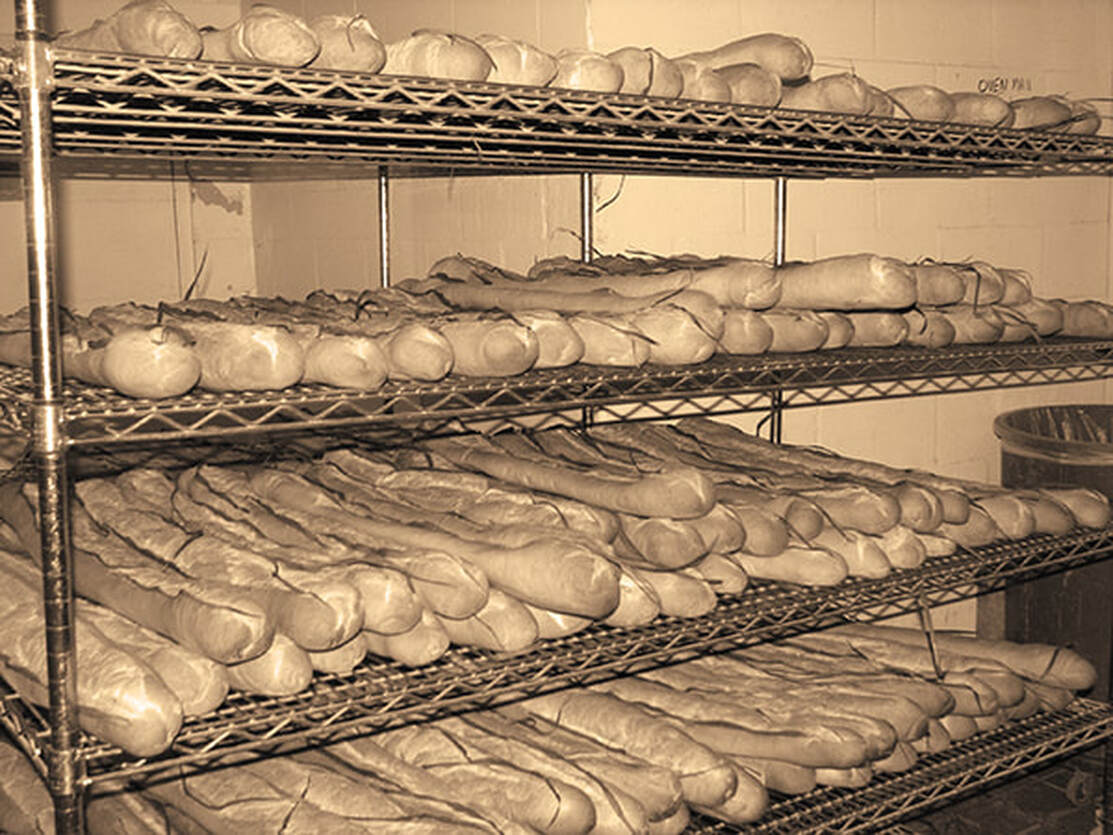
 Like many people in Tampa, I have taken for granted that I can get a great loaf of La Segunda’s Cuban bread just about anywhere in town. I certainly have eaten my share of it over the years–on the famous “Cuban sandwich,” and of course, in the morning, a Cuban tradition of Cuban toast with a cup of café con leche. If you buy enough to have leftovers, it also makes a wonderful bread pudding. Many years ago, naively unaware that real Cuban bread couldn’t be found all over our fair land, I looked everywhere in Atlanta to no avail. I wanted to make Cuban sandwiches for our annual family birthday party. It didn’t happen. Before flying to Atlanta for the annual party the following year, I bought a few loaves to make the special treat I had been raving about. Finally, I was able to introduce the Cuban sandwich to a lot of Georgia crackers, and they were pleased. So, enamored with the bread, the story of La Segunda bakery also interested me. One day recently, I sat down to talk to Raymond Moré, who owns the bakery, with his cousin Anthony Moré. While other bakeries in Tampa make fine Cuban bread, the Moré recipe came to Tampa from Cuba when his grandfather Juan Moré brought it with him after the turn of the 20th century. Juan Moré was born in Catalonia, Spain, but went to Cuba when he was conscripted to fight for Spain during the Spanish American War. After Cuba won their freedom, the withdrawing Spanish forces left Juan and other soldiers behind. In Cuba, Juan found a special bread everyone ate with every meal. Originally made into a round loaf, the bakers developed it into a long loaf during the war that could be rationed easily for the soldiers. After the war, Juan left Cuba and found a new home in Ybor City. The special recipe he brought with him sparked a tradition, for now, special bread to Tampa and for a sandwich worthy of annual contests and national recognition. On September 28, 1915, Juan opened the doors of his bakery, La Primera (the first), on 8th Avenue. The original bakery burned down, and La Segunda (the second) Central was built of red brick on 15th Street, approximately under the route of I-4 today. They had to move again in 1961 when urban renewal condemned their building. They’ve been in their current location, 2512 15th Street, Ybor City, ever since. Adequately baked, Cuban bread is crispy on the outside and soft inside. As Raymond Moré explained, that can be accomplished only when the bread is baked directly on a hearth. Similar breads, such as French bread, have small slits cut in the top of the loaf to allow steam and gases to escape as the yeast bread rises and is baked. A different type of Cuban bread is made in Miami. Their loaves have slits in the top and are baked in pans, creating more of a soft roll suitable for submarine sandwiches. 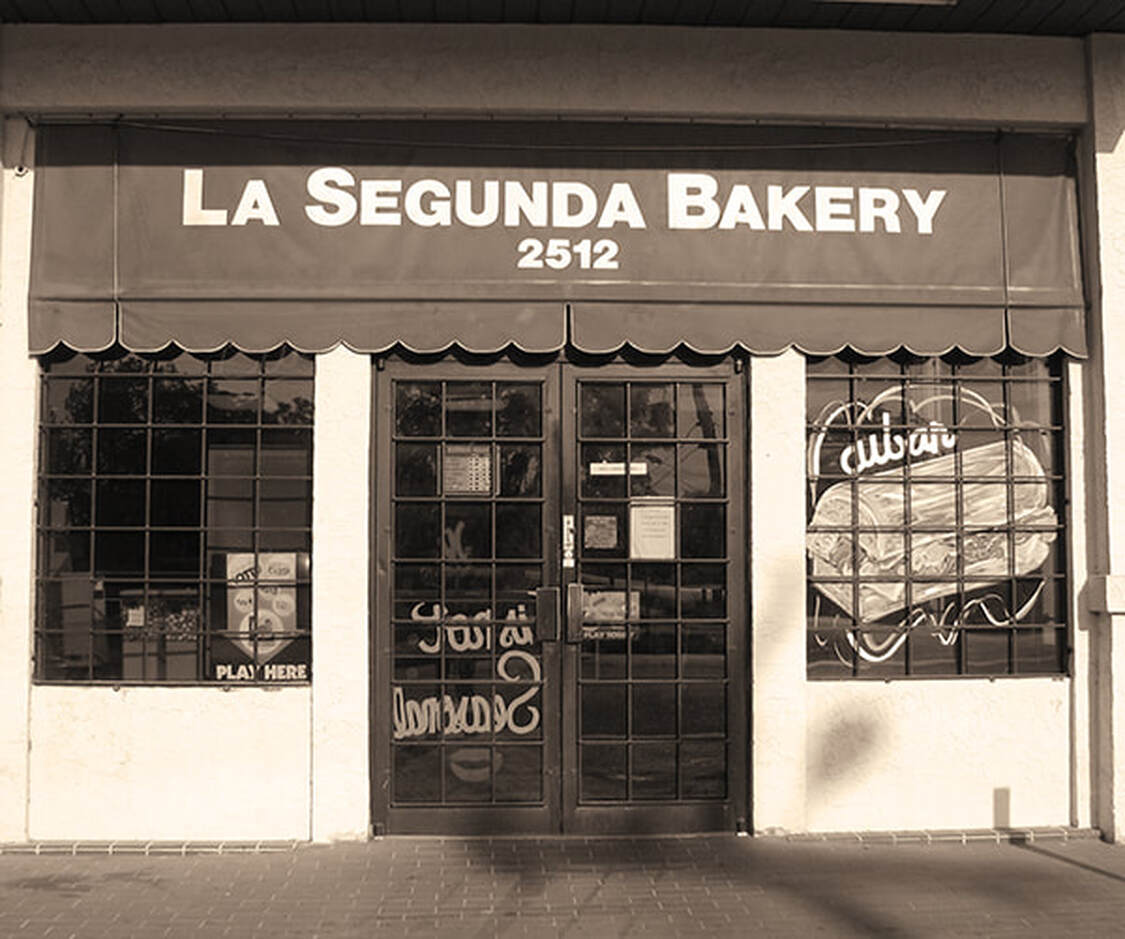 La Segunda Bakery on 15th Street in Tampa. In addition to hearth baking (the lowest section of a furnace), the Cuban bread we know in Tampa is superior for another reason. Ours is the bread with the “grass in it.” The grass is a piece of frond of the palmetto plant. I’m talking about the scrubby little bushes resembling palms that never grew up. You see them along the roadsides everywhere in Florida. The needle-sharp fronds are stripped from the scrub palmetto by field workers just as it was done at the beginning of the 20th century. The fronds are cut into strips, cleaned, washed, and left to soak in fresh water. After the bread dough has been kneaded, it is shaped into long ropes of dough and cut into lengths. A strand of the wet palmetto is placed along the center top of the loaf. The loaf is then placed frond side down to rise. As soon as it has risen sufficiently, the loaf is turned frond side up and allowed to rise again. When placed on the hearth in the ovens, the wet palmetto leaf causes the top of the loaf to split properly and creates the classic look we know today. In the days of horse and buggy, the loaves were delivered door to door in the wee hours of the morning. Residents of the casitas customarily drove a nail into the doorframe of their house so the deliveryman could jam the end of the bread on the nail. This kept it off the ground, away from the dirt and the critters looking for a complimentary breakfast before the homeowners could bring the bread inside. Two of Juan’s five children, Raymond and Anthony, followed their father into the business, and eventually, their sons continued the tradition. The first cousins, Anthony and Raymond, run the business today. The bakery carries a full line of pastries and traditional bread. The fame of the bread is now nationwide. When the Columbia Restaurant opened several locations around the state, the Morés needed a way to continue to supply them with fresh bread. That’s when the 19-inch “freezer loaf” was created. Beef O’Brady’s also uses the smaller loaf, and the Outback chain does as well. U.S. Foods and other distributors deliver frozen bread around the country. When the bread goes out of our community, a note of explanation should be included. Raymond tells of customers from around the country calling to complain that the bread has “grass in it.” He patiently tells the customer about the palmetto’s function, and they are satisfied. Customers and restaurant owners who try to substitute other bread are always disappointed. Attempts to change anything about the recipe, even leaving off the palmetto fronds, which add no flavor, have also consistently met with disapproval. It is a winning recipe: this excellent bread from Cuba many years ago. CIGAR CITY MAGAZINE- JULY/AUGUST 2006 Art & Photography Contributors: Hillsborough County Public Library, Tampa Bay History Center, The Florida State Archives, The Tampa Tribune/Tampa Bay Times, University of South Florida Department of Special Collections, Ybor City Museum Society, private collections and/or writer. GAIL ELLIS Gail Ellis attended the University of South Florida, lived and worked in Tampa for 40 years. Devoting her time to writing now, she currently resides in New Port Richey, Florida. She told us the following, “Just so you know, you cannot get decent Cuban bread nor a cup of café con leche in Pasco County.” FOLLOW CIGAR CITY MAGAZINE
0 Comments
Your comment will be posted after it is approved.
Leave a Reply. |
Archives
June 2013
Categories
All
|
 RSS Feed
Cigar City is a Florida trademark and cannot be used without the written permission of its owner. Please contact [email protected]
© 2021 Cigar City Magazine. ALL RIGHTS RESERVED.
© 2021 Cigar City Magazine. ALL RIGHTS RESERVED.